
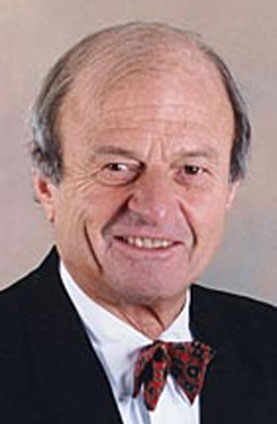
Stephen L. DeFelice, M.D.
Founder, and ChairmanStephen L. DeFelice, M.D. is the founder and chairman of FIM, the Foundation for Innovation in Medicine, a nonprofit organization established in 1976 whose purpose is to accelerate medical discovery by establishing a more productive clinical research community. A graduate of Temple University, Dr. DeFelice received his M.D. from Jefferson Medical College in Philadelphia. He was an NIH fellow in endocrinology, diabetes and metabolic disease at Jefferson and a fellow in clinical pharmacology at St. Vincent's Hospital and Medical Center in New York City. Dr. DeFelice was the former Chief of Clinical Pharmacology at the Walter Reed Army Institute of Research (WRAIR). He was a member of the Harvard School of Public Health's International Faculty on the Management of Biomedical Research and the Tufts' Faculty on the Principles of Clinical Research.…
Learn More
View Our Policy Proposal for the Doctornaut Act
Latest News
Carnitine: An FDA Approved Natural Substance Therapy for Children Shows Promise for Patients with Pulmonary Hypertension

(A Patient History Following the Moderna Covid booster shot) Stephen L. DeFelice, M.D. It all began in late 2021 after Patricia Anne Connell, the woman whom I love, received the Moderna Covid vaccine booster shot. What followed were chronic devastating, painful attacks on her multiple body systems so much so that she, over a year and a half later, has been, with the exception of periodic short stays at home, hospitalized or in a physical therapy facility. Three times her medical team strongly recommended to her the Hospice option which I would not permit simply because there were promising options.… Read More

(Our next president will have a dramatic impact on medical care, medical research and medical discovery. Hopefully, this assessment will be helpful in your considerations) Current “General” Cultural Dynamics A).The technology fueled destabilization of traditional values such as family, marriage, sex, religion, patriotism and respect, among others, has led to a tsunami of emotional and financial insecurity where people are increasingly depending on government for help which is why socialism supported by Democrats under the guise of Progressivism is taking hold. B). Coupled with “A” is the use of the internet where we now have an increasingly chaotic Virtual Democracy… Read More
April 2020

COVID-19 and Beyond: Presents An Historic Opportunity for the FDA Commissioner to Create a Two-Tier System to Accelerate the Discovery of Cures and Breakthrough Therapies for Diseases and Disabilities Stephen L. DeFelice, M.D., Chairman SUMMARY Covid-19 is a national overdue wake-up call to the disturbing reality that, despite the richness of our technology and abundance of creative scientists and physicians, the major weapon we currently have is quarantine. And few have asked the question why. And few have also asked, despite such richness and creativity, why there are so few cures for diseases and disabilities in general. There is one… Read More
March 17, 2017
The Doctornaut
Reform Proposal is Released

EXECUTIVE SUMMARY Who can argue that the most efficient path to reduce health care costs is best done by accelerating the discovery of cures of diseases and disabilities? The need for doctor visits, pharmaceuticals, diagnostic tests such as CAT scans and hospitalizations will be substantially reduced. The recently enacted 21st Century Cures Act by Congress, however, is an unfortunate misnomer for it will not deliver the misleading promise of its title. But there is something that will. The Doctornaut Act will do the job resulting in the accelerated discovery of cures accompanied by a substantial reduction of costs in all… Read More
Read all of Dr. DeFelice's Proposal to
Reduce Healthcare Costs from the August 2016 Exceptional Parent Magazine

Latest Videos
Dr. Defelice on Family
Prominent Research Physician Points to Cures As Key to Holding down Medical Costs
WESTFIELD, N.J., May 23, 2013 /PRNewswire-USNewswire/ — Stephen L. DeFelice, M.D., Founder and Chairman of FIM, The Foundation for Innovation in Medicine, released a new video criticizing mainstream health care cost projections of Medicare, Medicaid and Obamacare, among others, because they omit the discovery of cures. He…Read More